Cartographer's Labyrinth Challenge stands out for its focus on observation and memory rather than action. The procedural mazes ensure high replay value, and the clean interface makes it easy to concentrate. The time limit adds just enough pressure to keep things interesting without becoming stressful. A solid choice for puzzle fans seeking a calm but engaging mental workout.
Description
Core Gameplay Loop
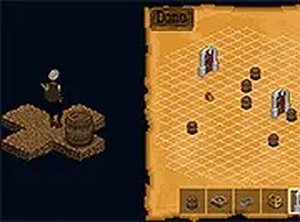
Players control a character moving through a series of interconnected rooms and corridors. The primary goal is to identify and record important features like concealed caches, hidden doors, and potential hazards. Unlike many exploration games, this title emphasizes mental acuity over reflexes. Success depends on noticing subtle visual cues and retaining the layout of the maze to produce an accurate map. Each session presents a fresh challenge, as the maze is generated anew, ensuring no two playthroughs are identical.
Observation and Memory Mechanics
The game's design centers on two cognitive skills: attention to detail and spatial recall. As you explore, you must look for faint markings, unusual textures, or slight color variations that hint at something hidden. Clicking on these spots marks them on your map. Missing a detail can result in an incomplete chart, pushing you to be thorough. A gentle time constraint adds pressure, requiring you to balance speed with precision. The controls are simple, making the experience accessible to players of all ages.
Visual and Audio Design
The interface is clean and uncluttered, allowing players to focus entirely on the maze. Graphics use a muted palette that highlights important elements without distraction. Sound effects are minimal and non-intrusive, providing subtle feedback when you mark a feature or when time is running low. The full-screen mode helps immerse you in the environment, making it easier to spot details. This family-friendly presentation ensures a comfortable experience for everyone.
Procedural Generation and Replayability
Each new game generates a unique maze layout, so players cannot rely on memorizing a fixed path. This procedural system creates varied room shapes, corridor lengths, and feature placements. The randomness encourages repeated play, as you develop strategies for different configurations. Over time, you may improve your ability to quickly identify patterns and optimize your route through the maze. This structure keeps the game engaging for both casual and dedicated puzzle enthusiasts.
Tips for Efficient Mapping
To get the most out of the game, take a moment to scan each room before moving on. Use the marking tools consistently to avoid confusion later. Try to memorize room layouts to reduce backtracking. Planning a logical path through the maze can save valuable time. Short, focused play sessions are effective for sharpening your observation skills. These approaches help you build a complete map while managing the time limit effectively.
❌ Not supported: Internet Explorer, older browser versions
Faq
Is Cartographer's Labyrinth Challenge free to play?
Yes, the game is completely free to play. There are no hidden costs or in-app purchases. You can access it directly through your desktop browser without any downloads or installations required.
What are the system requirements for this game?
The game runs on any modern desktop browser, including Chrome, Firefox, and Edge. It does not require a powerful computer or graphics card. A stable internet connection is needed to load the game, but after that, it runs smoothly on most systems.
Can I play this game on a mobile device or tablet?
The game is designed specifically for desktop browsers and may not function properly on mobile devices or tablets. It uses keyboard and mouse controls, which are not optimized for touchscreens. For the best experience, play on a computer.
How long does a typical game session last?
Each session is influenced by the time limit, which adds a sense of urgency. Most playthroughs last between 10 and 20 minutes, depending on your speed and the complexity of the maze. The procedural generation ensures that each session feels different.
Are there different difficulty levels in the game?
The game does not explicitly offer difficulty settings. However, the procedural generation can create mazes of varying complexity. Some layouts may be more straightforward, while others feature intricate passages. Your own skill improvement over time effectively adjusts the challenge.
What happens if I miss marking a feature on the map?
Missing a feature means your map will be incomplete at the end of the session. The game does not penalize you harshly, but an incomplete map may affect your overall score or sense of accomplishment. The focus is on encouraging careful observation rather than punishing mistakes.
Player Comments
💬
Sign in to comment
You must be logged in before posting a review or rating.






Player Comments
Sign in to comment
You must be logged in before posting a review or rating.
No account? Create one
No comments yet. Be the first to comment!